The War Within: Finding Peace in a Divided World
The question of the moment, whether we are looking at the dinner table or the national news, is a fundamental one: How do I coexist with people who feel impossibly different from me? We see it in the "macro" of a divided United States and in the "micro" of our primary relationships with parents, partners, and children. When we can’t bridge that gap, we walk around with a sense of contraction, a heart that is closed, and an internal tension that feels like a constant war.
The Mechanics of Belief
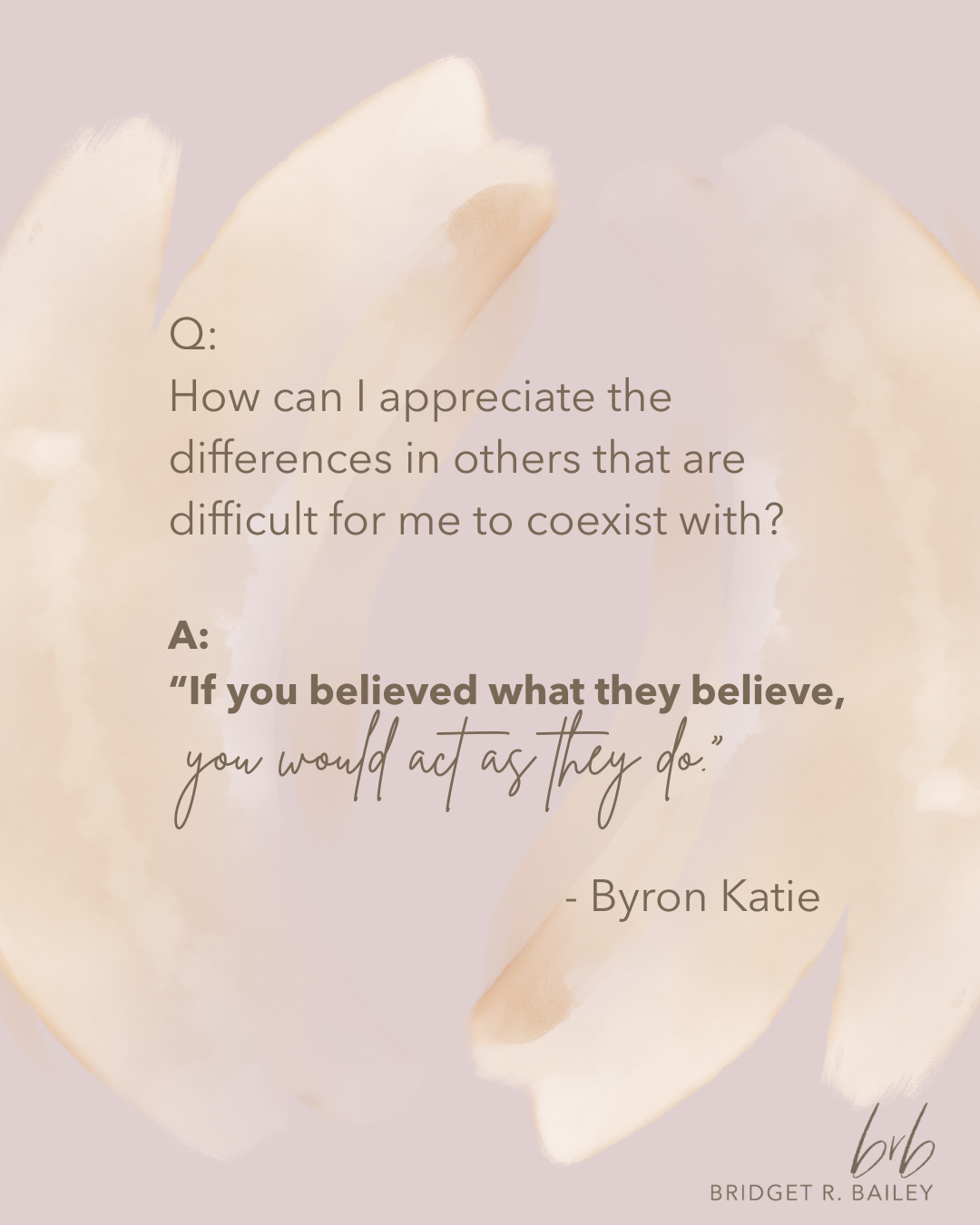
To find a way out of this tension, I often return to a powerful concept from Byron Katie: “If you believed what they believe, you would act and behave in the same way.” This isn't just a quote; it’s a framework for radical empathy. It suggests that human behavior isn't random or inherently "bad"—it is the logical result of a person’s internal map. If you had walked their path, inherited their fears, and adopted their specific beliefs, your actions would be a mirror of theirs. By acknowledging this, we stop fighting the person and start understanding the belief system that drives them.
The Human Blueprint
When we peel back the layers of politics, personality, and conflict, we find a shared biological and emotional blueprint. No matter which side of the divide someone stands on, they possess the same heart, lungs, and nerves. We all seek pleasure and avoid pain.
But most importantly, at the core of every human struggle is a simple, universal desire: to feel seen, safe, and loved. Whether it’s a family member you’ve stopped speaking to or a political figure you can’t stand, their actions—however misguided they may seem—are usually a distorted attempt to secure those three basic needs.
Cultivating Wisdom Over Agreement
It is important to clarify that "appreciating differences" is not the same as liking someone or condoning their behavior. You don't have to invite the conflict to dinner to understand why it exists. Instead, this is about cultivating wisdom.
When we refuse to appreciate these differences, we are essentially fighting with reality. We tell ourselves, "You shouldn't be this way," or "I need you to change for me to be okay." This resistance doesn't change the other person; it only hurts us. It creates a "stiring" anger that lacks the clarity for productive action.
Ending the Internal War
Appreciating the "other" is ultimately an act of self-care. By recognizing the shared humanity beneath the disagreement, we allow our own hearts to stay open. We move from a state of war to a state of observation. We realize that we are all exactly the same in our most fundamental ways, even if our beliefs have led us to different conclusions.
In a world that feels increasingly fractured, the most revolutionary thing we can do is end the war within ourselves. When we stop demanding that reality be different, we finally find the peace we’ve been looking for.